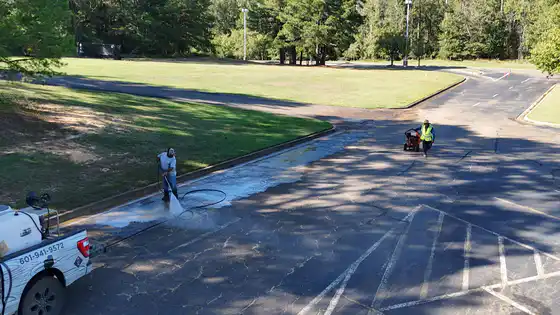
Washed clean
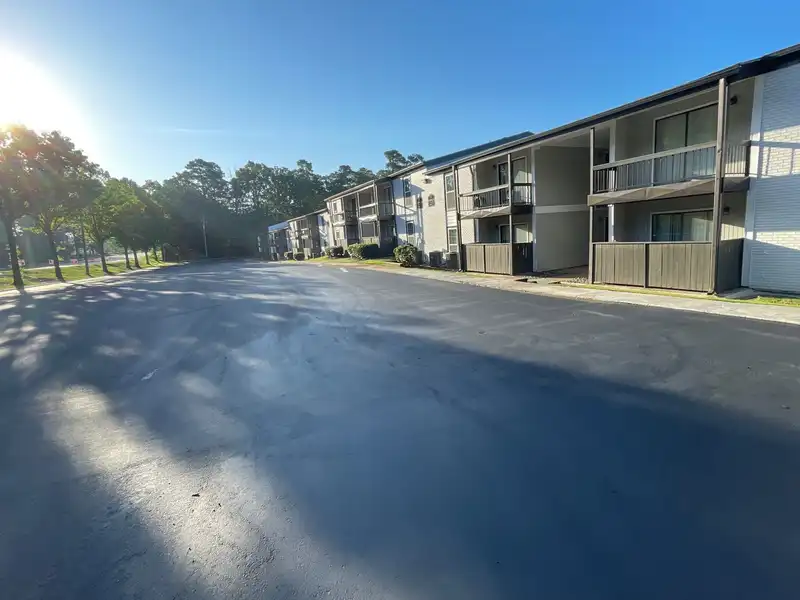
Dirt and loose debris come off before any coating goes down, so the sealcoat bonds to the asphalt instead of the grime sitting on top of it.
Asphalt sealcoating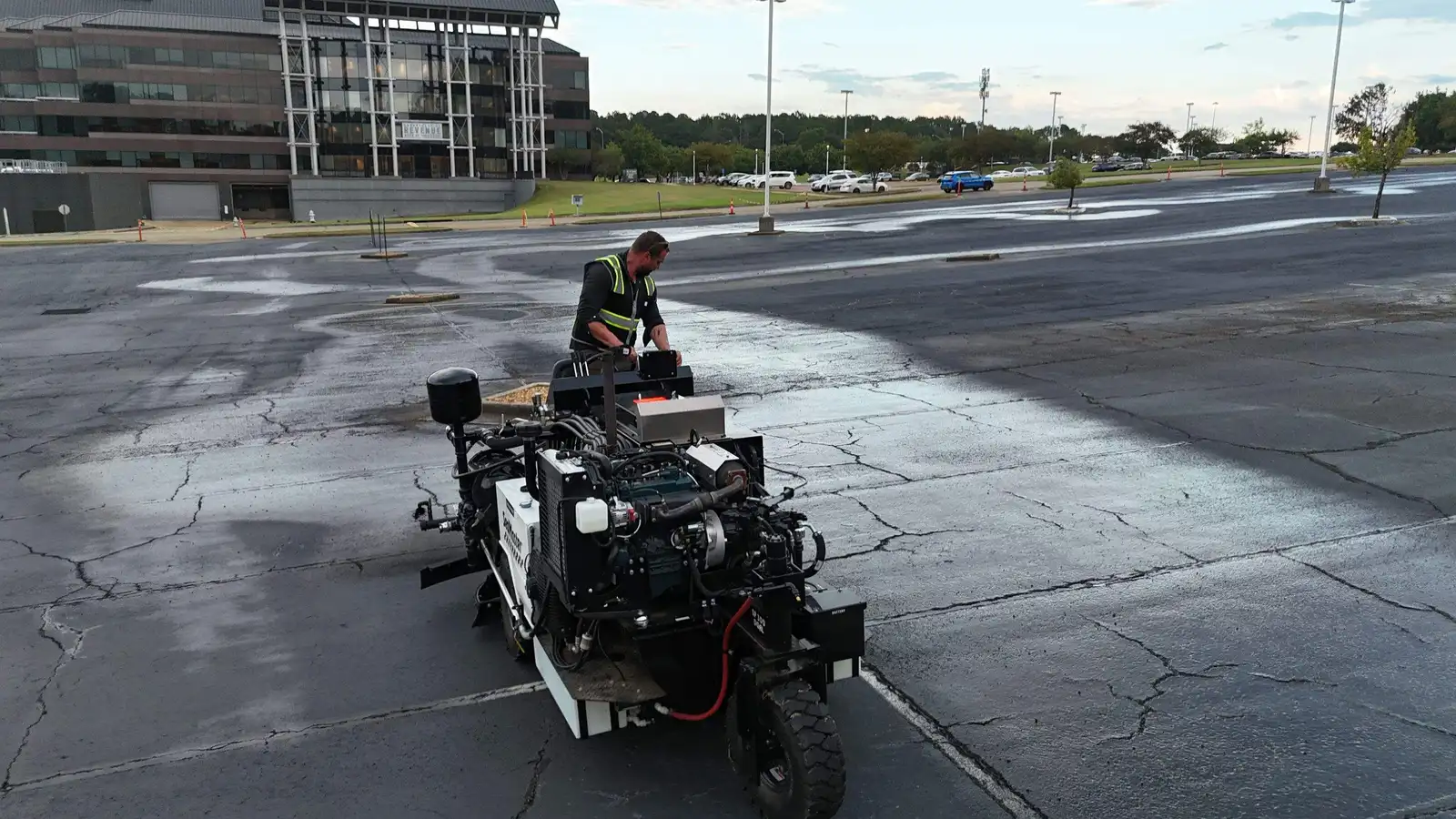
Free written quotes on sealcoating in Collins, MS.
Protection from UV, water, and oil. Two coats, dry in 24 to 48 hours.
We sealcoat yards, shop lots, and driveways in Collins and across Covington County, including North Collins and Downtown Collins. Our crews come out from our Madison and Jackson locations.
| typical thickness | 2 coats commercial-grade sealant |
|---|---|
| base material | Existing asphalt, cracks filled |
| cure time | 24 to 48 hours before traffic |
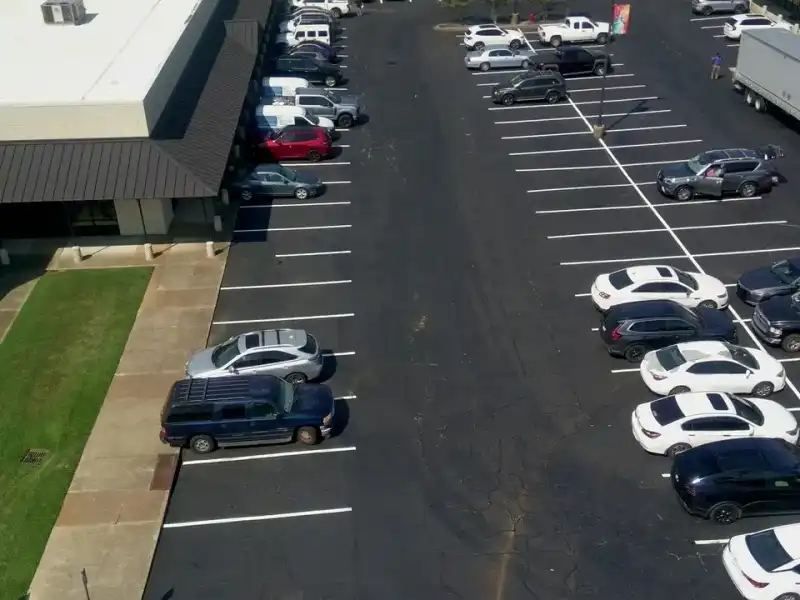
Sun and traffic dry asphalt out from the top down. The black fades to gray, the surface turns brittle, and fine cracks open. In a yard, drips from parked trucks and machines add to the wear. Sealcoat puts a fresh protective layer over sound asphalt before that wear reaches the base.
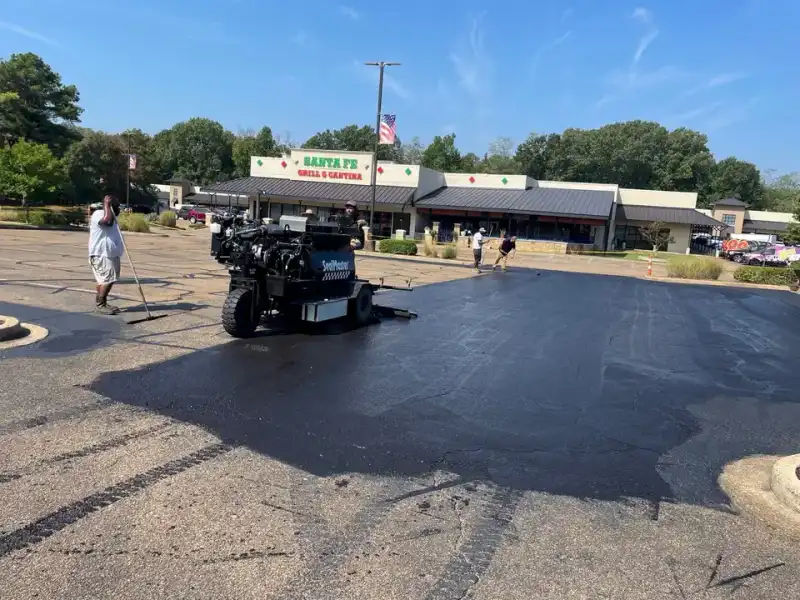
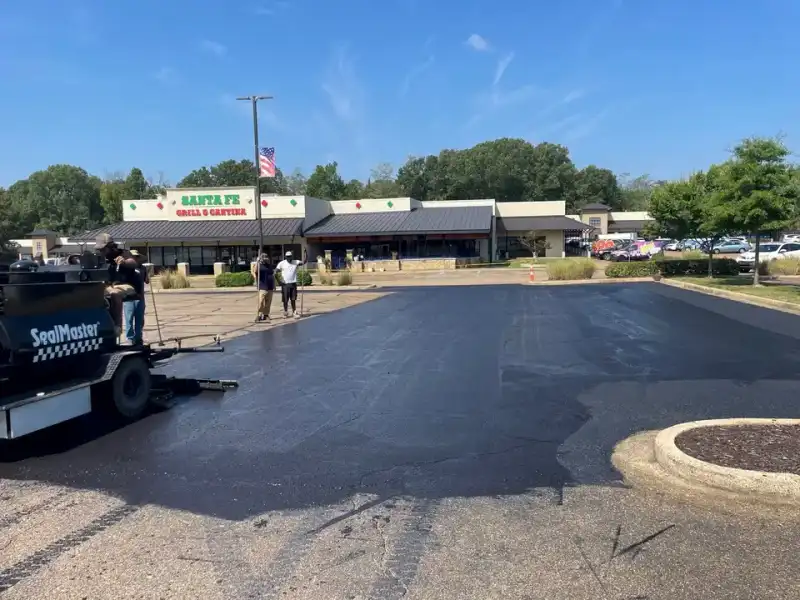
The lot is cleaned first, so the coating bonds to the asphalt and not to the dust on top of it. Cracks are blown out and filled with hot-applied crack filler. Then two coats go on. On a large lot, they are flood-coated with a squeegee machine, and the coating dries in 24 to 48 hours.
Timing matters. New asphalt cures for 6 to 12 months before its first coat. After that, a lot is sealed every 1 to 2 years. Sealcoat covers the old lines, so our own crews restripe once it dries, and the fast-dry paint is ready in about 30 minutes. That is also a good time to repaint the boundaries between the truck lanes and the car rows.
Dirt and loose debris come off before any coating goes down, so the sealcoat bonds to the asphalt instead of the grime sitting on top of it.
Asphalt sealcoating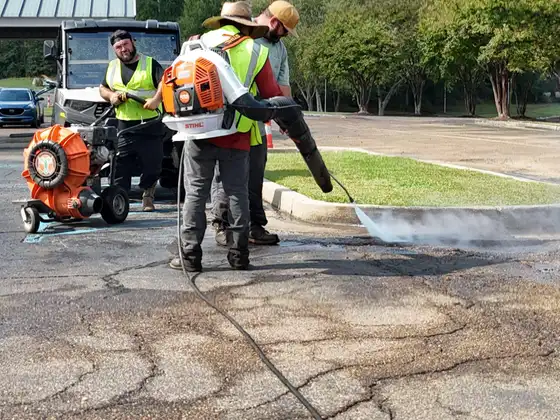
Cracks are blown out and filled with hot-applied crack filler first, so water can't keep working down into the base under the new coat.
Crack filling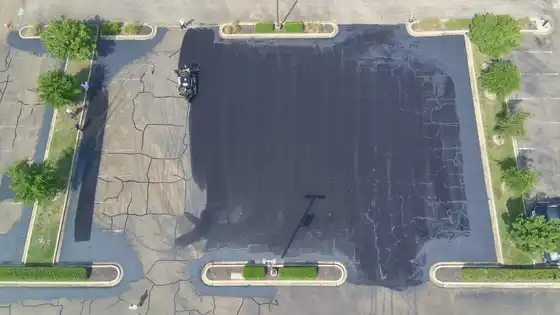
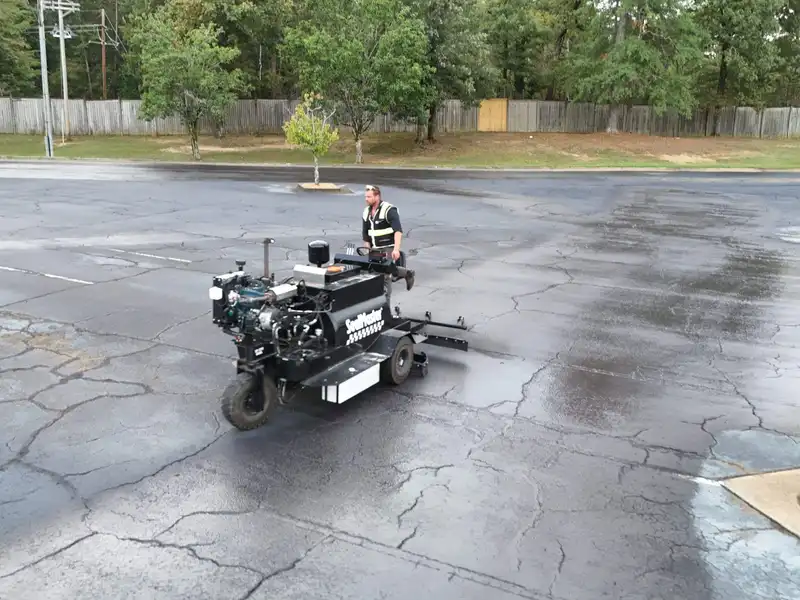
On large lots, a squeegee machine flood-coats the surface one section at a time, so part of the lot stays usable while the rest dries.
Paving in CollinsSealcoat protects sound asphalt. It cannot fix a failed base, and it won't hold a rutted truck lane together. On a yard, that means the answer often changes from one zone to the next, so we look at each zone on its own.
Car rows and light lanes are usually good candidates. They see less weight, and if the surface is gray but still solid, filled cracks and two coats will protect it. Heavy lanes need a closer look. If a truck route has started to rut, sink, or break into a web of cracks, those spots get cut out and rebuilt before any coating goes on. A coat over that kind of damage won't last, and the damage shows back through.
We walk the lot with you and mark which zones get sealed, which get patched first, and which need repaving. Each goes on the quote as its own line item with its own scope, so you can seal the sound areas now and plan the rest.
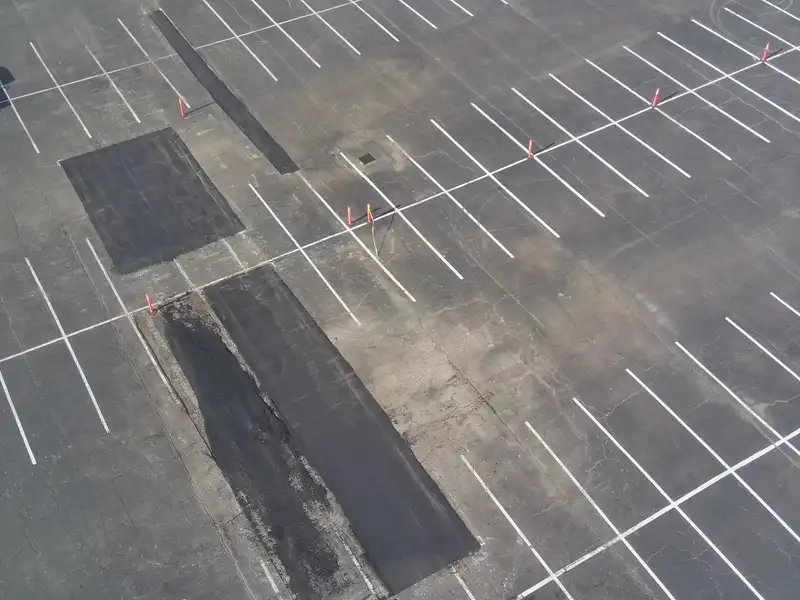
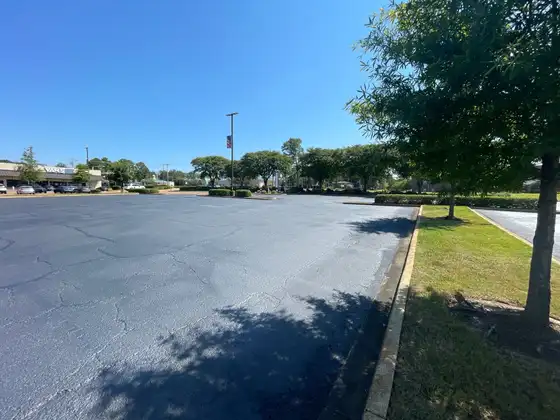
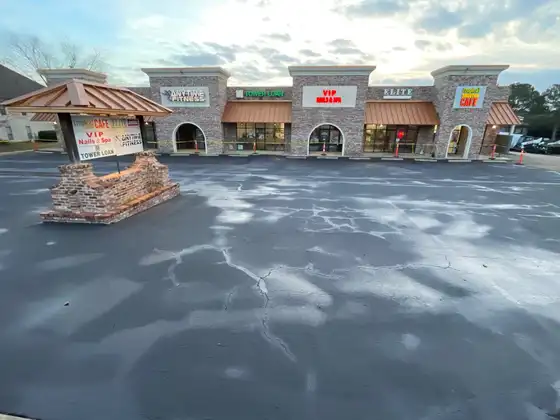
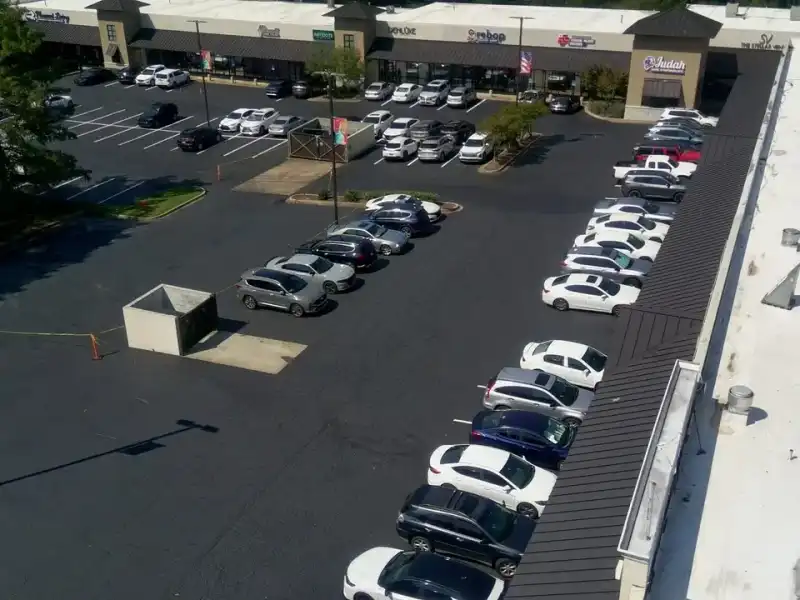
Car rows and light lanes that are faded but solid get their cracks filled and two coats, protecting them before the wear goes deeper.
Lot paving in Collins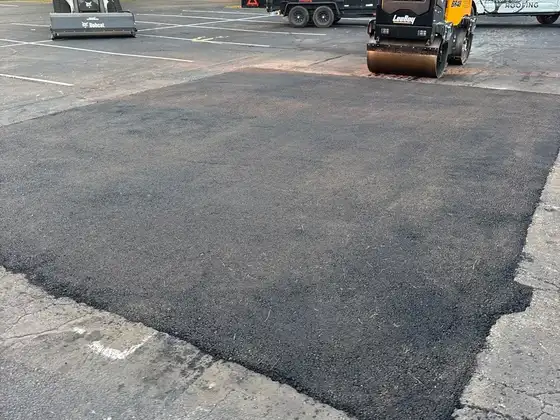
Failed spots in truck lanes are cut out, rebuilt, and rolled smooth, so the sealcoat on the rest of the lot has sound asphalt to protect.
Parking lot repair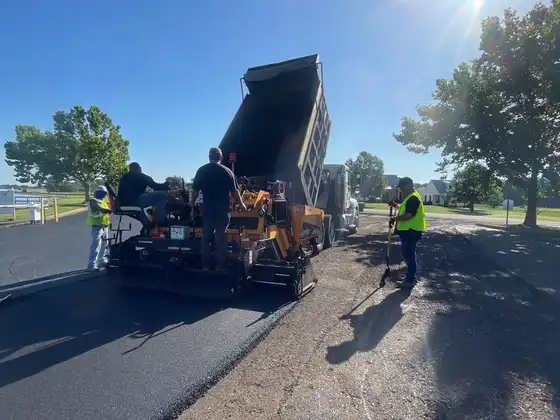
Where a whole lane has failed, an overlay or rebuild is the right fix. That new asphalt gets its first sealcoat after it cures for 6 to 12 months.
ResurfacingA yard full of trucks and equipment can still be sealed. We coat in sections. Machines move out of a section before the crew gets there, and they move back in once it has dried. Tell us which rows must stay open and which days trucks come and go, and we set the order around that.
Each section needs 24 to 48 hours to dry before vehicles go on it. On a working lot, that usually means sealing the light zones and storage rows first and the truck route after, so there is always a way in. The work is planned around your hours.
Most sealcoating can be quoted from photos and a rough size. Send pictures of the lot, including the worst cracks and stains, and we send back a free written quote, often the same day. Sealcoating and striping each get their own line on it. If something in the pictures looks like a failed base, we come out to see it before we quote.
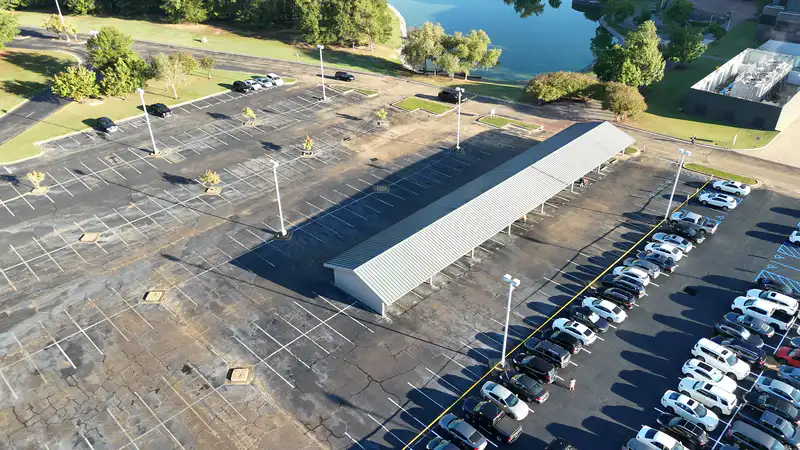
Trucks and equipment move out of the first section while the rest of the yard keeps running.
The surface is cleaned, cracks are filled with hot-applied filler, and then two coats go on.
Each section dries in 24 to 48 hours, and then our crews repaint the lines.
Yes. We sealcoat yards, shop lots, and driveways in Collins and across Covington County with our own crews.
Yes. We work in sections, and equipment moves out of each section before the crew reaches it.
If they are sound, yes. If they have rutted or broken up, those spots need to be cut out and rebuilt first, because sealcoat cannot fix a failed base.
Yes. Each zone and service is its own line item, so you can seal the sound areas now and plan repairs for the rest.
Each section needs 24 to 48 hours to dry before trucks or cars go back on it.
Every 1 to 2 years, in two coats, with the cracks filled first.
No. New asphalt needs 6 to 12 months to cure before its first sealcoat. We can put that first coat on the quote as its own line item.
Yes. Sealcoat covers the old lines, so we restripe the lot once the coat is dry. Our own crew does the striping and ADA markings.
Usually, yes. Send photos and the rough size of the area, and we will put together a free written quote. If we see damage that needs repair, we will come look first.
One coat leaves thin spots that wear through early. The second coat fills them in and evens out the protection across the whole surface.
Tell us about the job and we'll send a written quote with a line item for each service.