Along the curbs
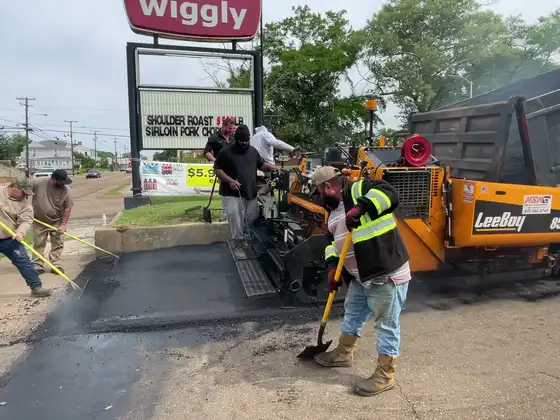
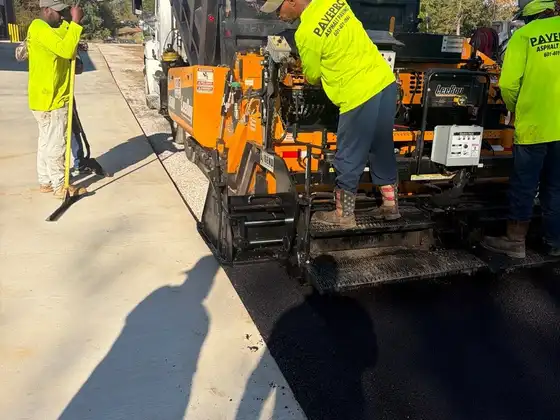
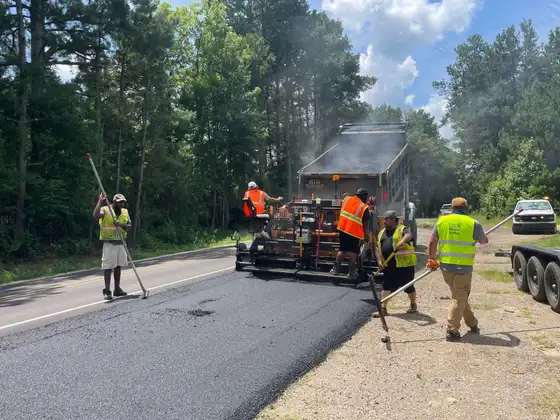
The paver runs tight to the curb line so the new asphalt meets it cleanly, and the crew hand-finishes anything the machine can't reach.
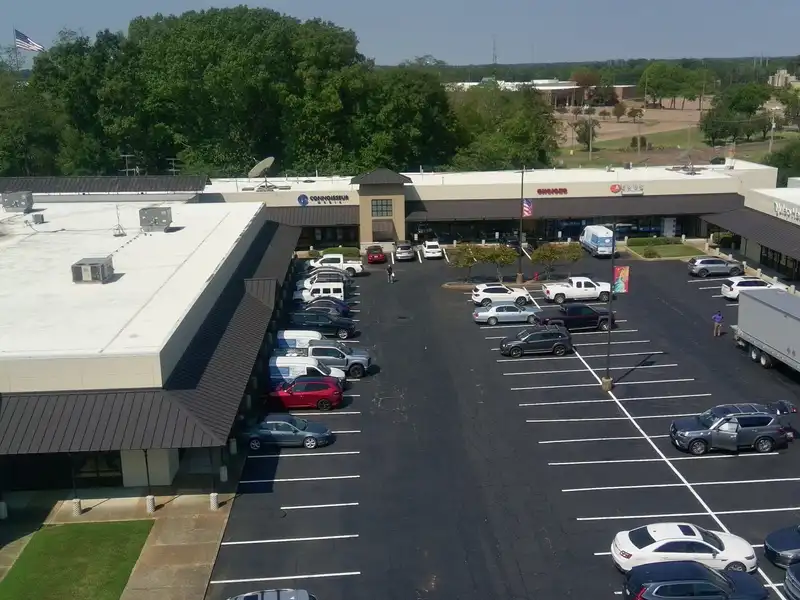
Parking lot paving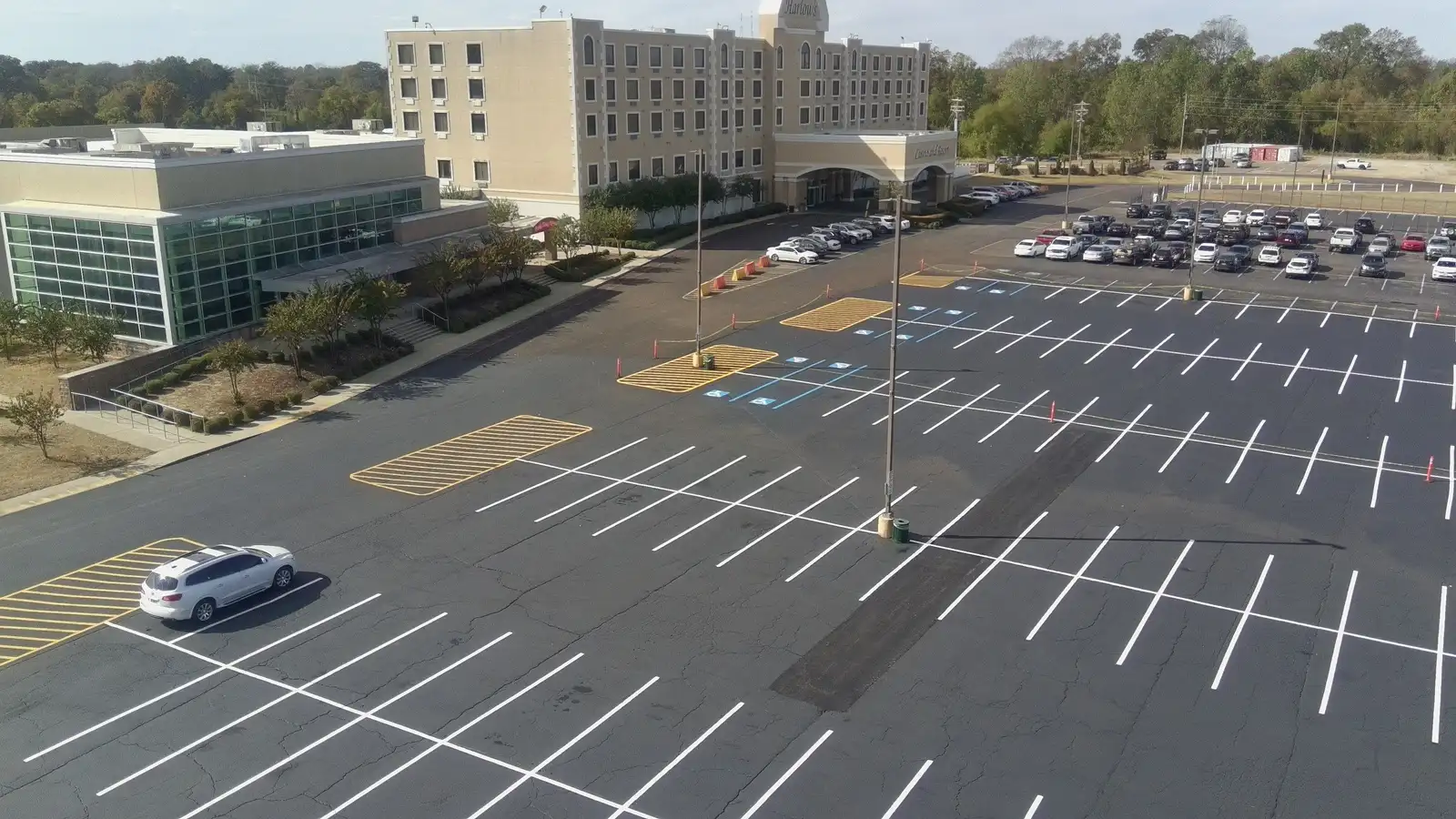
Free written quotes on parking lot paving in Petal, MS.
New lots and repaves for businesses, churches, and schools, with ADA layouts.
We pave HOA common-area lots and shared parking in Petal and across Forrest County, including Downtown Petal and Hillcrest, with crews coming from our Madison and Jackson locations.
| typical thickness | Compacted hot mix, sized per lot |
|---|---|
| base material | Compacted crushed aggregate base |
| cure time | Cars in about 24 hours, heavy trucks in 48 to 72 hours, full structural cure 6 to 12 months |
An HOA lot works differently from a store lot. It sits quiet most days, then fills up for a meeting or an event, and the trash service and delivery vans come through every week. The parking stalls see light use. The entrance and the turn-in carry most of the weight. We build the base and the asphalt for the traffic each area carries, and the thickness is spec'd per job after we see the site.
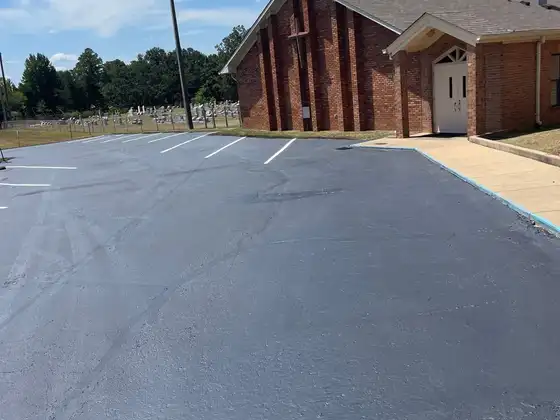
Before paving, we walk the lot with a board member and mark what can be saved. Where the base is sound, failed spots are cut out and patched and a new layer goes on top, milled at the edges so it stays level with curbs and drains. Where the base has given out, it gets rebuilt, with a compacted crushed limestone base under any new section.
When the paving is done, our own crews stripe it: stalls, ADA spaces, access aisles, and arrows. Nothing is handed to another company, so the board deals with one contractor from the first walk-through to the last painted line.
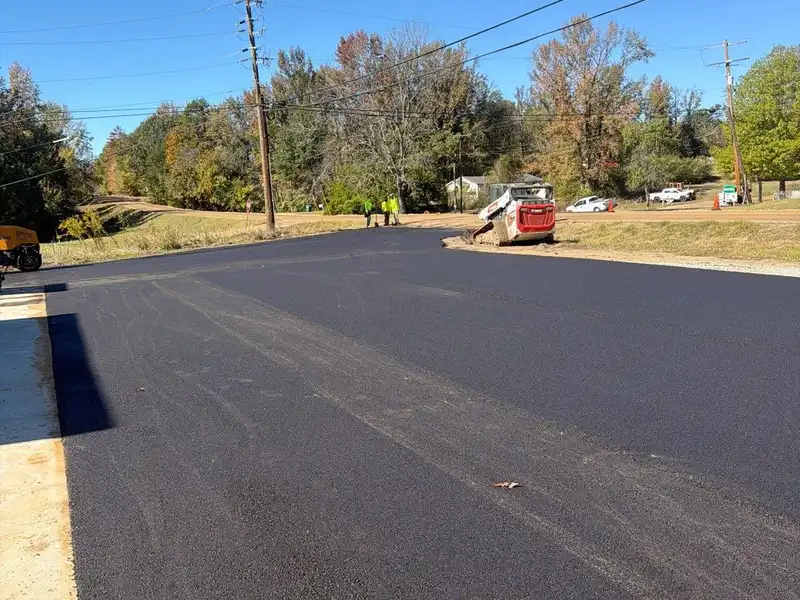
The paver runs tight to the curb line so the new asphalt meets it cleanly, and the crew hand-finishes anything the machine can't reach.
Parking lot paving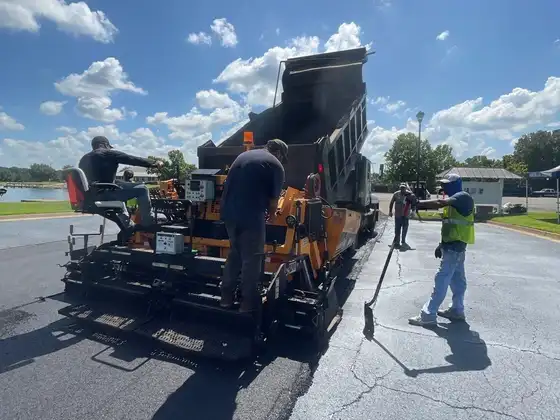
A lot with a solid base can take a new layer once the failed spots are patched, which costs less than tearing the whole lot out.
Resurfacing and overlays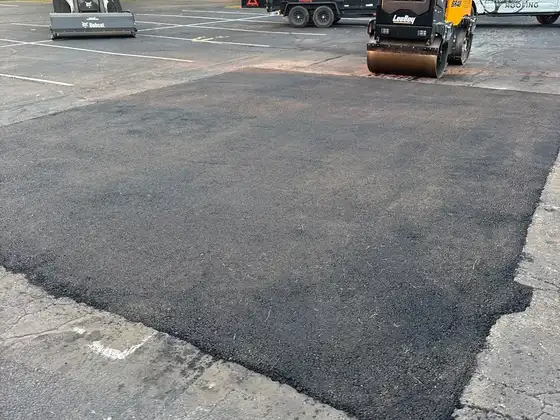
Soft, broken areas are cut out, the base under them is rebuilt, and new asphalt is rolled smooth before any overlay goes down.
Parking lot repairThe entrance is where a neighborhood takes its hardest use. Every car in and out crosses it, and trucks turn on it. When a board is paving the common lot, it often makes sense to look at the entrance and the first stretch of street in the same quote, so the work is planned once and the new asphalt matches.
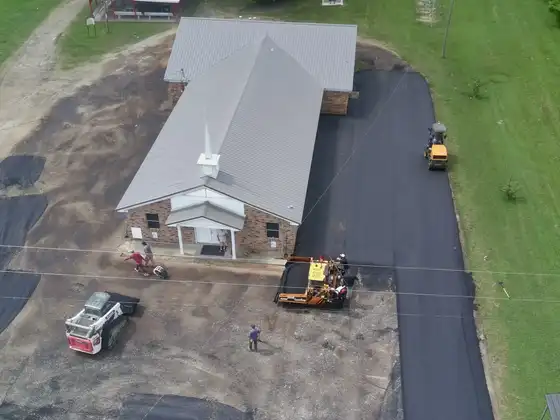
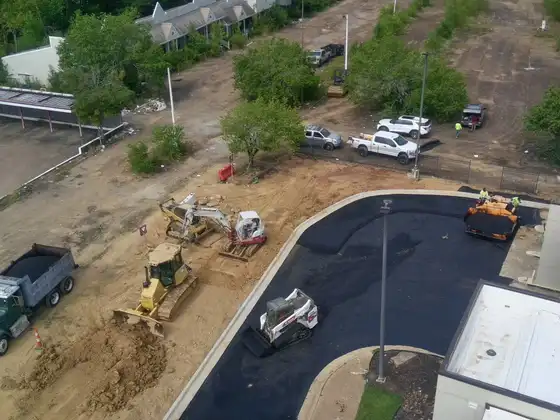
Streets and entrances are built the same way as a lot, with the base sized for the traffic. The old surface is milled where the new asphalt has to stay level with curbs, drains, and the road it ties into. Trucks keep the paver supplied, the roller compacts the mat behind it, and the edges along the gutters are finished with rakes and a plate compactor.
An entrance can't close for long. When the layout allows, we pave it one lane at a time so residents keep a way through, and we plan the work around the hours people leave and come home. Cars can usually use new asphalt after about 24 hours, and heavy trucks after 48 to 72 hours.
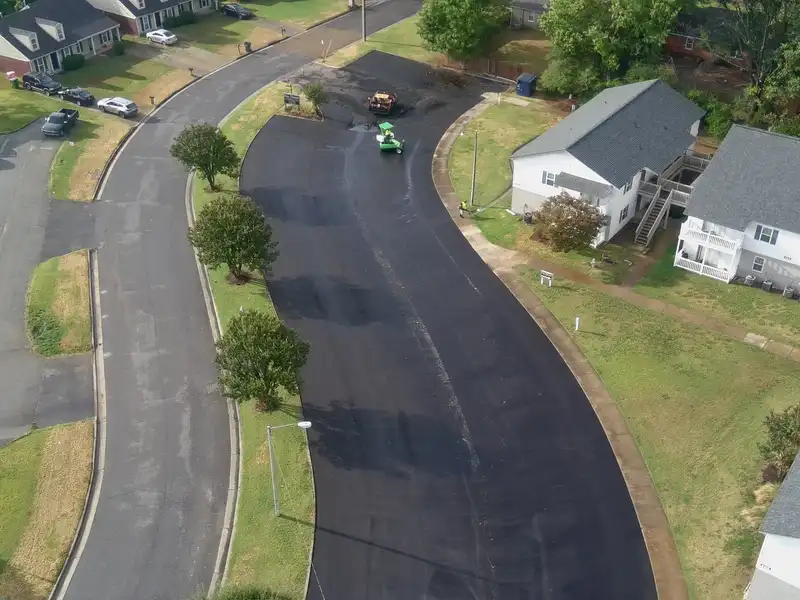
Neighborhood streets in the shade get the same base work and the same paving crew as an open lot, paved one stretch at a time.
Road paving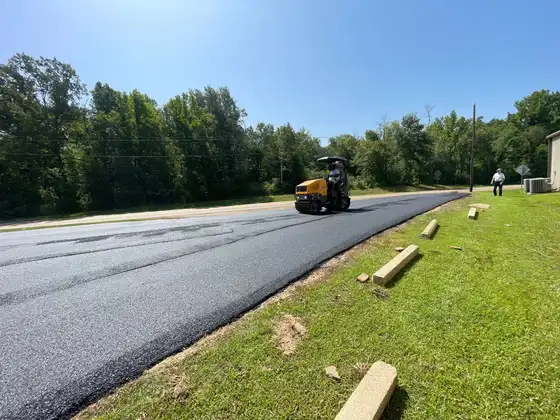
Private streets and shared drives are rolled lane by lane behind the paver, with the base sized for the cars and trucks they carry.
Private road paving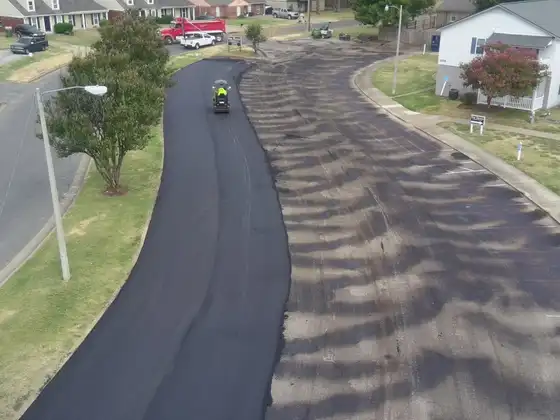
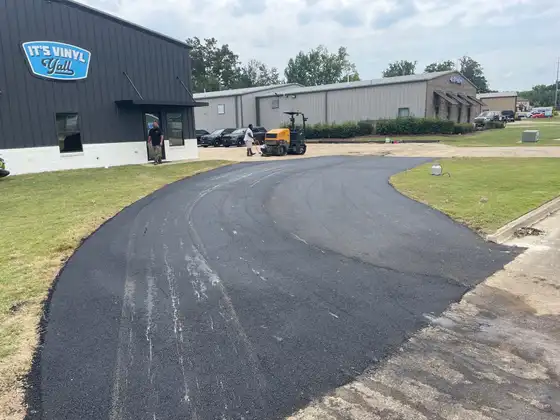
Where new asphalt meets older pavement, the edge is milled first so the new mat ties in level, with no ridge along the line.
Asphalt millingA board needs more than a number. It needs to know what the number buys. Our quote is free and written, often ready the same day, with a line item for each service, each with its own scope. Patching, paving, the entrance, and striping each sit on their own line, and anyone reading it later can match each line to a spot on the lot.
We don't give prices over the phone. Paving gets a site visit by appointment, where we check the base, the drainage, and the pavement that's there now. If the board wants options, ask for the work split into phases, and each phase is written with its own scope so it can be approved on its own.
After approval and the deposit, most lots are scheduled within 2 to 3 weeks, and urgent repairs can go sooner. Paving usually takes 1 to 2 days, and a job with sealcoating and striping added usually takes 2 to 5 days.
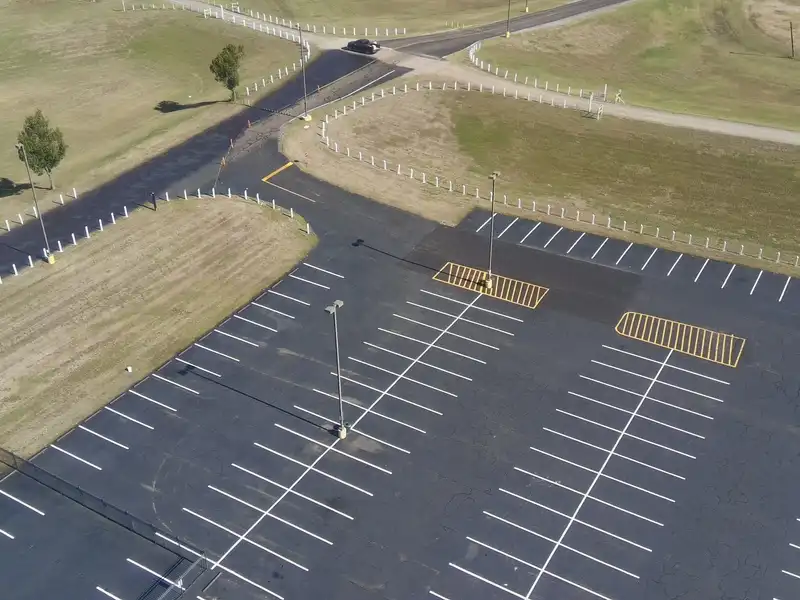
By appointment, we check the base, drainage, and traffic paths, and note which areas need patching, an overlay, or a rebuild.
Each service gets its own line and scope, so the quote can be forwarded and read without us in the room.
Approve the full job or one phase. Most work is scheduled within 2 to 3 weeks of the deposit.
Yes. We pave, patch, and overlay HOA common-area lots and shared parking in Petal and across Forrest County with our own crews.
Yes. The entrance and the nearby street can go on the same quote, each with its own line item and scope.
Yes. Ask for a phased quote and we write each phase with its own scope, so the board can approve one at a time.
Not always. If the base is still sound, failed spots are patched and a new layer goes on top. If the base has failed, rebuilding it is the fix that lasts.
We pave in sections when the layout allows and plan the work around residents' hours, so there is usually a way through.
For paving, yes. We come out by appointment to check the base, drainage, and existing pavement, then write the quote, often the same day.
Paving usually takes 1 to 2 days. With sealcoating and striping added, it usually takes 2 to 5 days.
It depends on the lot. We spec the asphalt thickness and base to the traffic your lot actually carries, so heavier truck traffic gets more.
Cars and other light vehicles can usually drive on new asphalt in about 24 hours. Heavy trucks need 48 to 72 hours.
Our own employees do it. Stall lines, ADA spaces, fire lanes, arrows, crosswalks, and custom markings are all done in-house, on the same schedule as the paving.
Tell us about the job and we'll send a written quote with a line item for each service.