What asphalt milling is, in plain terms
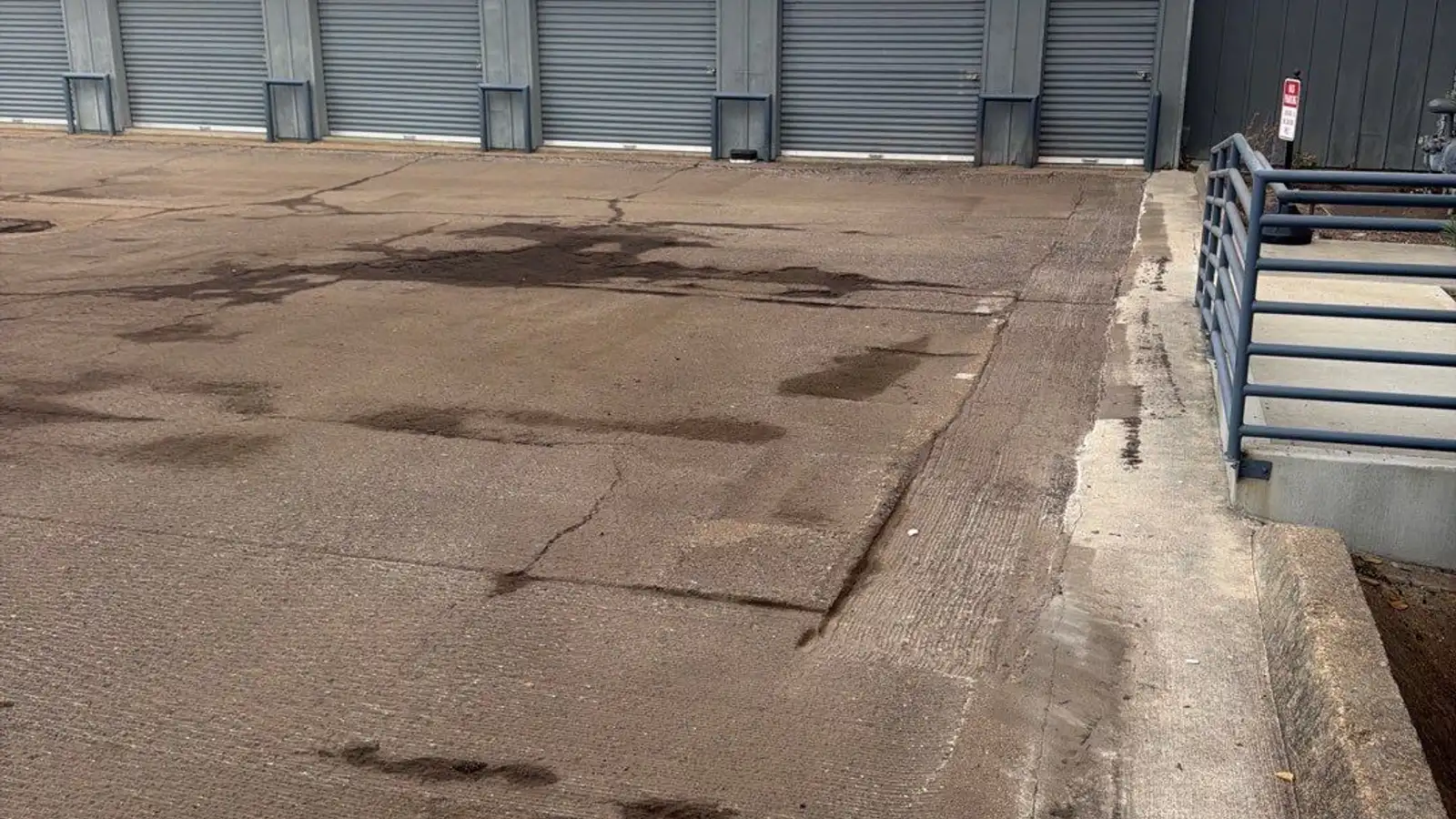
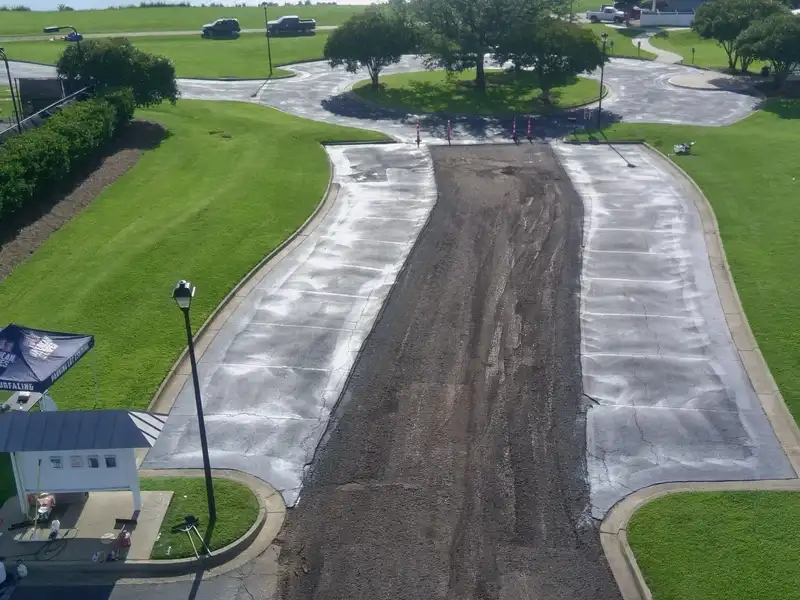
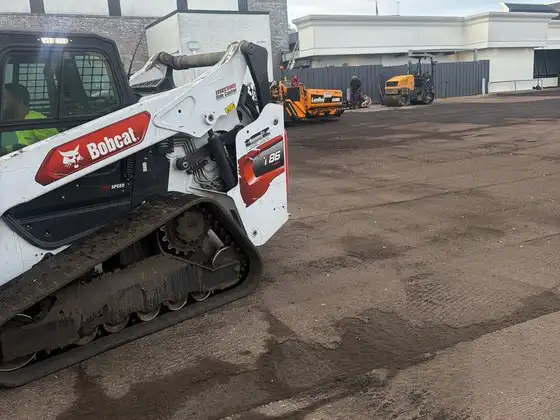
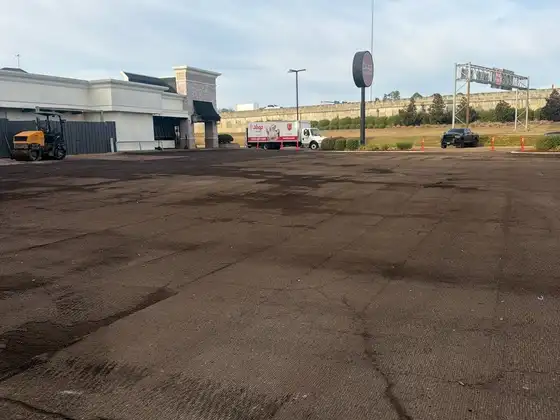
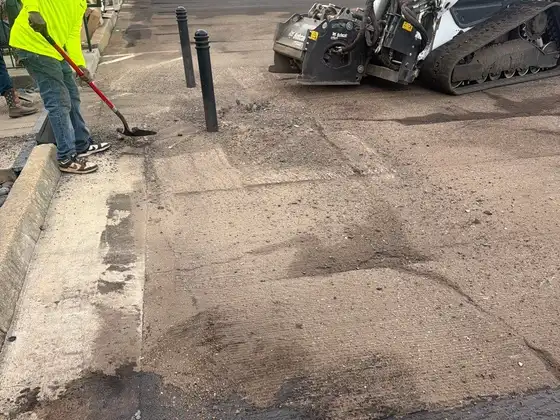
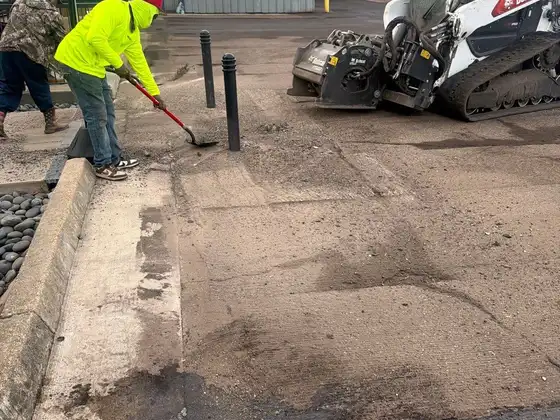
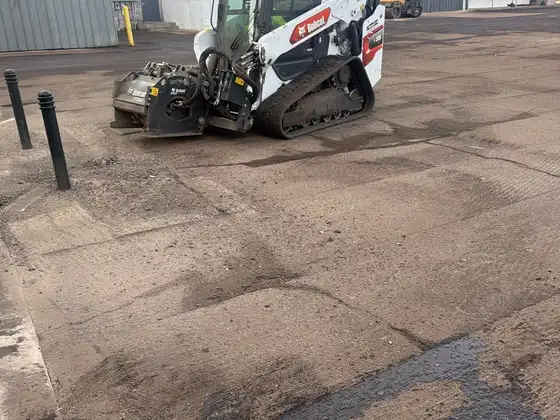
A milling machine has a spinning drum covered in cutting teeth. It grinds the top of the asphalt into small pieces and loads them onto a truck, leaving a grooved surface at a set depth. New asphalt then goes back in that space.
The point is control over the finished height. Every time a lot or street gets a new layer on top without milling, the surface rises. Do that a few times and the pavement is level with the curb, the gutters stop carrying water, and the step at every doorway grows. Milling resets the surface so the new layer ends up where it should.
Milling is one step in a larger job. On its own it leaves a rough surface that has to be paved, usually as part of asphalt resurfacing.
When milling is the right call
We recommend milling before paving when one or more of these is true:
- The pavement runs along curbs and gutters, and an overlay would bury the curb or block drainage.
- The new surface has to meet doorways, ramps, sidewalks, or loading docks flush.
- Earlier overlays have already raised the surface too high.
- The top layer is cracked, raveled, or uneven, but the base below is still sound.
- The slope needs reshaping so water drains toward inlets instead of toward buildings.
- New pavement has to tie into a street, driveway, or older pavement without a bump.
If none of those apply and the surface is in fair shape, an overlay without milling may be the better value. We will tell you which way we would go and why.
Reclamation vs milling: when the base has failed
Milling only fixes the top. If the base under the asphalt has gone soft, you will see it in widespread alligator cracking, ruts in the wheel paths, and spots that pump water after a rain. A new surface over that base cracks the same way, often within a few seasons.
Full-depth reclamation deals with the whole structure. The old asphalt and part of the base under it are ground up and blended in place, sometimes with added stone or a stabilizer, then graded and compacted into a new, stronger base. New asphalt is paved on top. Reusing the material on site cuts down on hauling old pavement away and trucking new base in.
The third option is removal and replacement: digging out the old pavement and base and building new. On large areas where the base failed across the board, reclamation is usually worth pricing. Where failures are limited to a few spots, cutting out and rebuilding those areas, then milling and overlaying the rest, often makes more sense. For localized commercial damage, see parking lot repair.
What happens to the milled asphalt
Milled asphalt, often called millings, gets loaded straight into trucks and hauled off the site as the machine works. It is one of the most recycled materials in construction: it commonly goes back into new asphalt mix or gets used as base material.
Some property owners want millings for their own use, such as a farm lane or equipment area. If that interests you, bring it up when we quote so it can be planned into the job. Keep in mind that millings are loose material that behaves more like gravel than asphalt. For a lane you want paved for good, see private road paving.
What affects the cost of asphalt milling
Milling is priced as part of the full job, because what matters is the finished pavement. The main factors:
- Total area and how deep the milling needs to go, spec'd per job.
- Base repairs uncovered once the surface comes off.
- Hauling the millings away.
- Access for trucks and equipment, and how the job is phased around traffic.
- The new asphalt, plus tie-ins at entrances, ramps, and streets.
- Restriping, which our own employees handle.
Settle up front how base repairs found during milling will be priced, so there are no surprises on the invoice. The quote is free, written, and itemized.
Questions to ask before milling starts
Good milling jobs are planned before the machine shows up. Ask any contractor, including us:
- How deep will you mill, and why that depth?
- What happens if the base is soft once the surface comes off, and how is that priced?
- How long will the milled surface sit before paving, and is it safe to drive on in the meantime?
- Which areas stay open each day, and how will customers or residents get in?
- Where do the millings go?
- Who restripes afterward, and when?
Clear answers in writing protect you from the most common milling disputes.