Signs your parking lot needs repair
Most lot failures give plenty of warning. These are the ones worth a call:
- Potholes, or patches that sink and break up again
- Spiderweb cracking, where small cracks link up into a pattern that looks like scales
- Standing water that sits in the same low spots after every rain
- Edges breaking off where the lot meets the grass, a curb, or the street
- Ruts and shoving where delivery trucks turn, stop, or park
- Broken pavement in walking paths, at entrances, or near accessible stalls
If your cracks are still thin and the surface around them is solid, you may not need repair yet. Crack filling and sealcoating are the cheaper first line, and we will tell you if that is all the lot needs.
Parking lot repair vs. replacement: how we decide
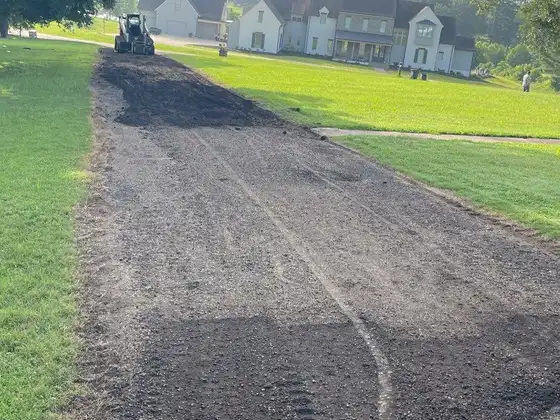
The question is how much of the lot has failed and why. A few potholes over a sound base are a patching job. Spiderweb cracking across most of a drive lane means the base under it has given up, and patching it piece by piece costs more over a few years than fixing it once.
We look at three things on the site walk: how widespread the damage is, whether water is getting under the pavement, and what kind of traffic the lot carries. A lot that sees garbage trucks and deliveries every day fails in different places than one that only sees cars.
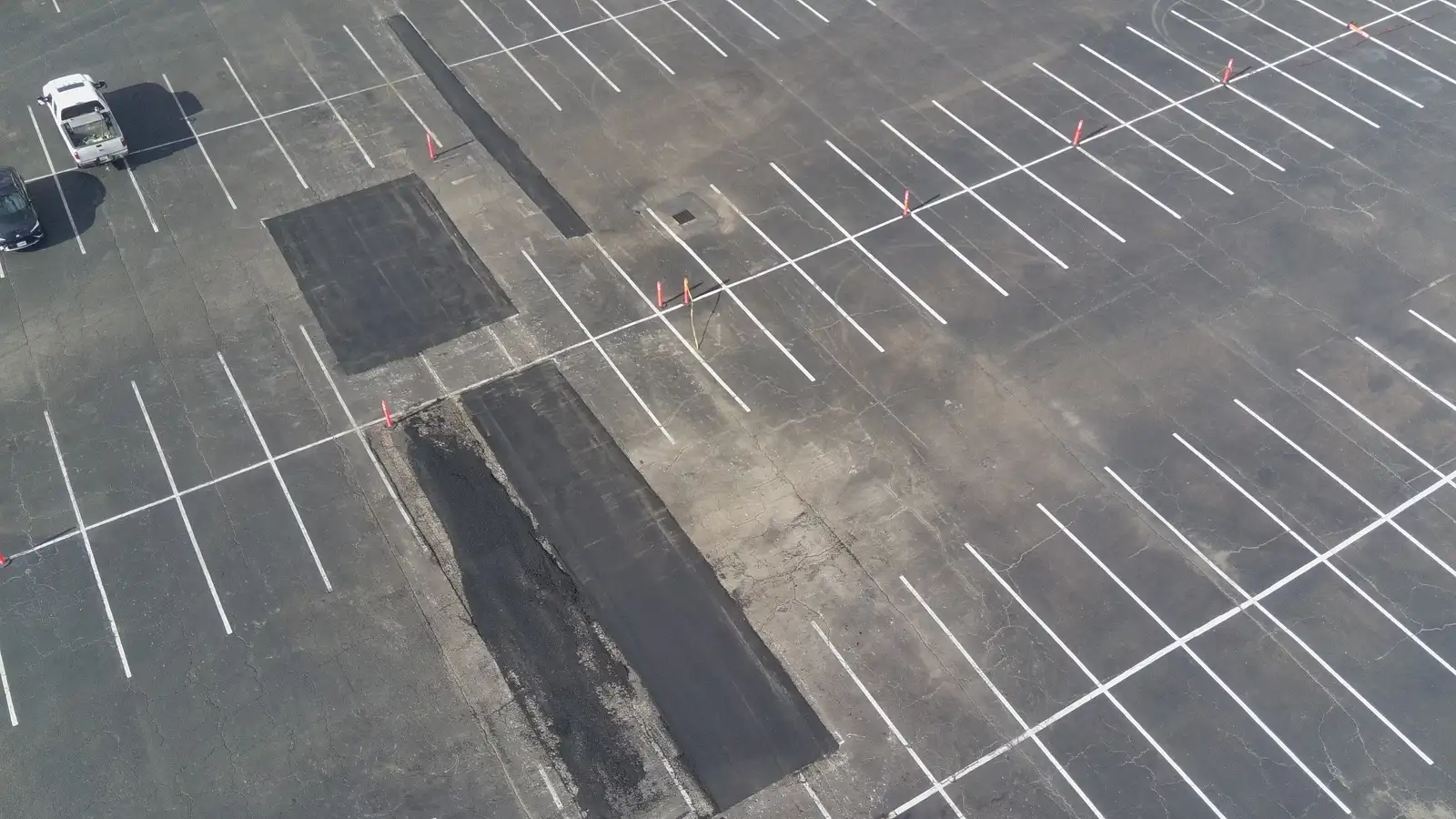
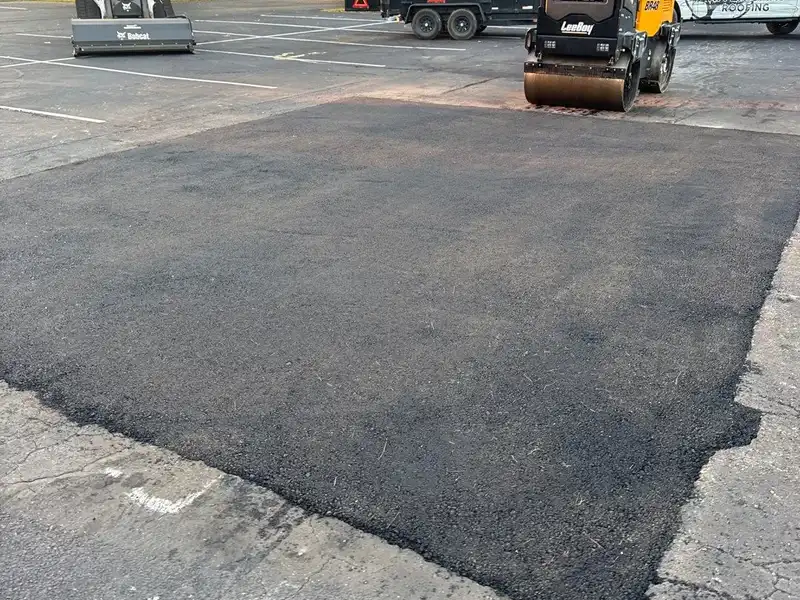
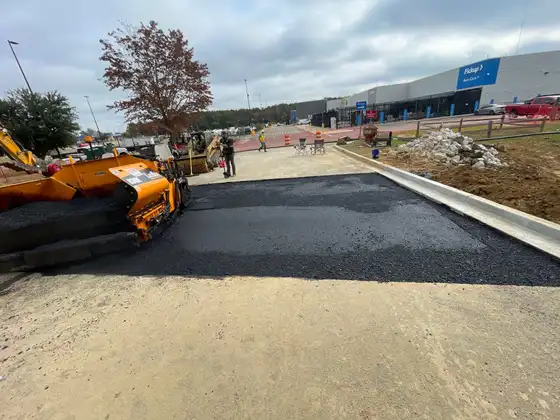
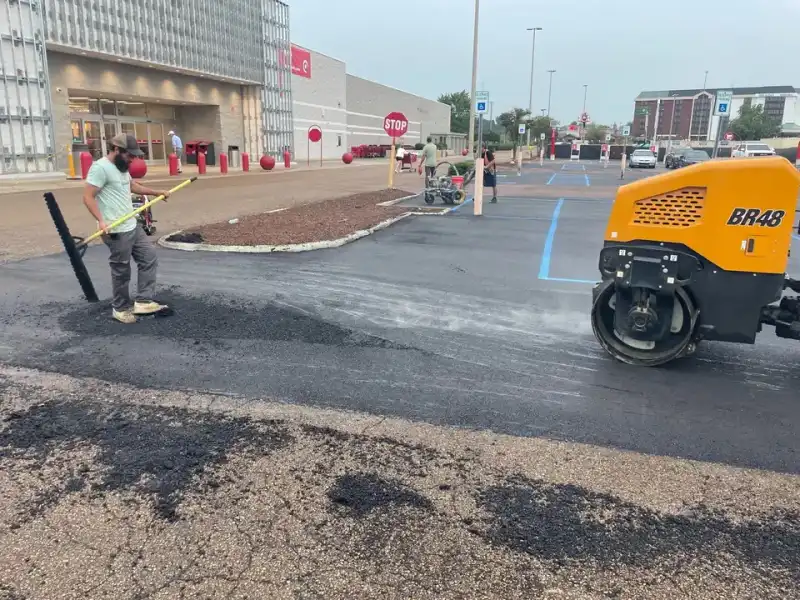
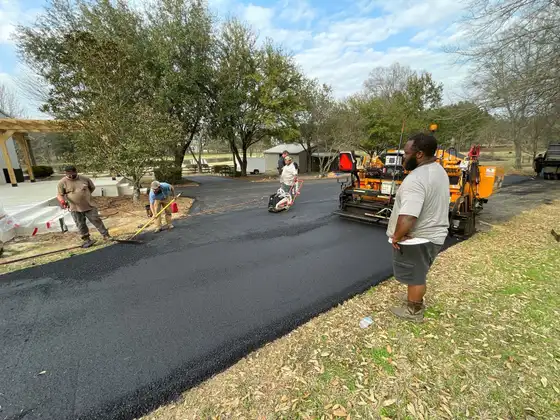
From there the answer usually lands in one of three places. Spot repairs for isolated failures. Resurfacing when the base is mostly sound but the surface is worn out. Full replacement, or a new section of parking lot paving, when the base itself has failed. Your quote lays out the option we recommend and why.
Trip hazards, liability, and accessible parking
On a commercial lot, the damage that matters most is where people walk. A broken edge at a storefront, a pothole between the handicap stall and the ramp, or a sunken patch in a crosswalk is where someone falls. Those areas go first on our repair list, even when bigger damage sits out in the drive lanes.
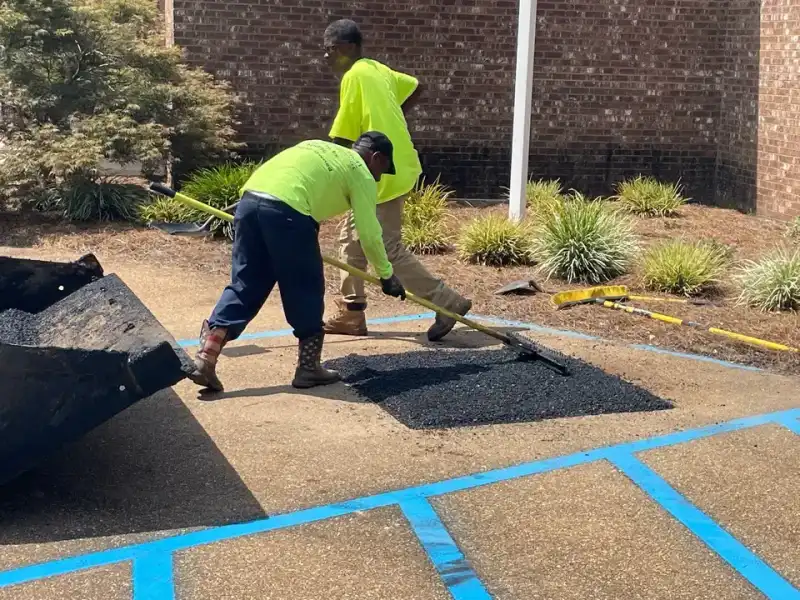
When we repair near curb ramps, sidewalks, and accessible routes, we build the new asphalt flush with what it meets so the fix does not leave a new lip behind. ADA stalls, access aisles, and crosswalks get restriped in-house by our own employees once the asphalt is ready, so the lot reopens marked the way it was.
If your insurer, landlord, or a city inspector has flagged specific spots, send us the list. We will price those areas as their own line items so you can see exactly what it takes to clear them.
Repairing a parking lot while your business stays open
Closing the whole lot is rarely an option. We phase the work by section so part of your parking and your main entrance stay usable, and we plan the order so customers are never boxed in.
The schedule works around your week. A church does not want crews on Sunday morning. A school wants the work done on a break. A restaurant cares about the lunch rush. Tell us your busy times and we build the sequence around them. Striping can sometimes go down at night or on a weekend, depending on the project.
Plan for cure time in each section. Cars can use new asphalt in about 24 hours. Heavy trucks need 48 to 72 hours, so if your deliveries come through a repaired lane, we will talk through routing them around it for a couple of days.
What drives the cost of parking lot repair
Every repair quote is built from what we find on the walk. The biggest factors:
- How many failed areas there are and how big each one is
- Whether the base and drainage under them need rebuilding
- The traffic the lot carries, which sets how the repair is spec'd
- Phasing, sequencing, and any off-hours work
- Restriping, ADA stalls, and other markings the repair disturbs
- How easily trucks and equipment can reach the work
Your quote is free, written, and itemized, with no hidden fees. You will see each repair area priced on its own line, so if the budget is tight you can do the safety items now and plan the rest.
What to ask before you hire a parking lot repair contractor
A few questions sort out most of the risk:
- Will you cut out the failed asphalt down to the base, or pave over it?
- What happens if you find a soft base once the old asphalt is out?
- Do your own employees do the paving and striping, or is any of it subbed out?
- Do you carry general liability and workers' comp?
- Is the quote written and itemized, and does it show how you will phase the work?
Our answers: we cut out and rebuild failed areas, we call you before any change to the scope, our own crews do the paving, striping, and ADA markings, we are licensed and insured with both general liability and workers' comp, and every quote is written and itemized. We stand behind our work.
Keeping repaired areas from failing again
Once the failed areas are fixed, keeping water out keeps them fixed. Fill new cracks as they open, and sealcoat the lot every 1 to 2 years, with the cracks filled first. New asphalt should cure 6 to 12 months before its first sealcoat. Restripe after each sealcoat, since the coating covers the old lines. A lot kept on that schedule can last 20 to 30 years.