Gravel driveway or asphalt: when converting makes sense
If you searched for a gravel driveway, you are probably weighing cost against upkeep. Gravel is cheaper on day one. The bills come after: stone to replace what washes out, regrading when the ruts get deep, and the dust and mud that come with it.
Converting to asphalt makes the most sense when:
- The driveway gets daily use and the ruts keep coming back
- Hard rains wash stone into the yard, the ditch, or the road
- The drive runs up or down a slope
- Dust coats your cars, your house, or your storefront
- You are tired of buying stone and paying for regrading
- Customers, members, or students park there and you need marked spaces
If you are pricing a new gravel driveway from bare ground, get a number for a new asphalt driveway next to it before you decide.
How your existing gravel becomes part of the base
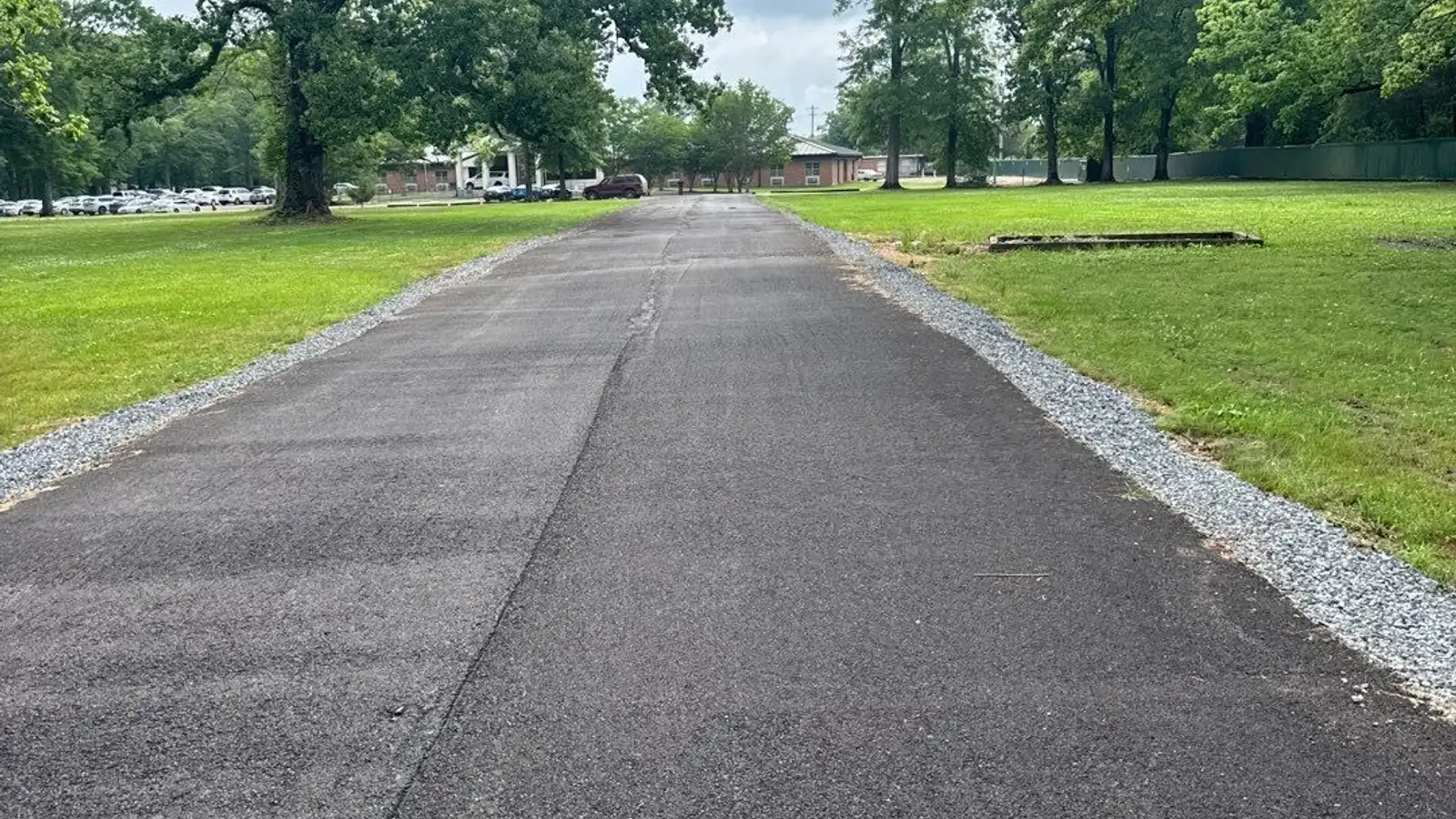
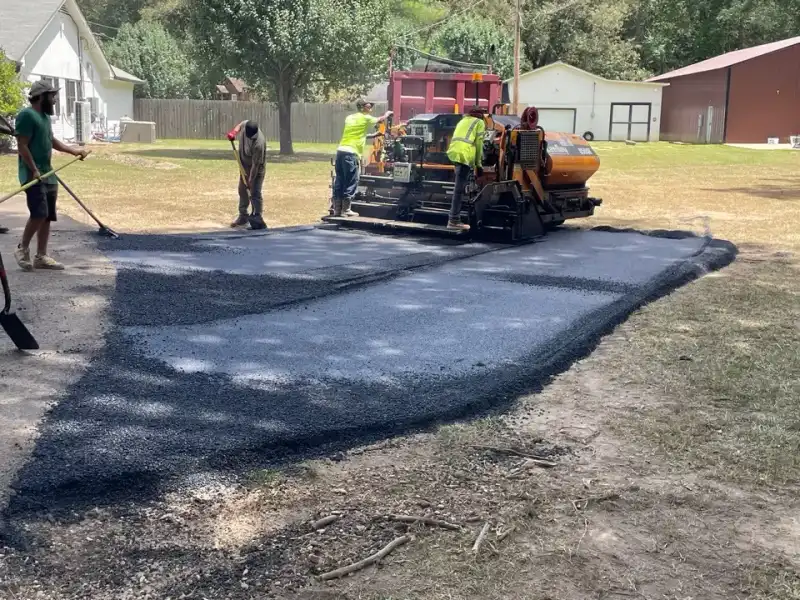
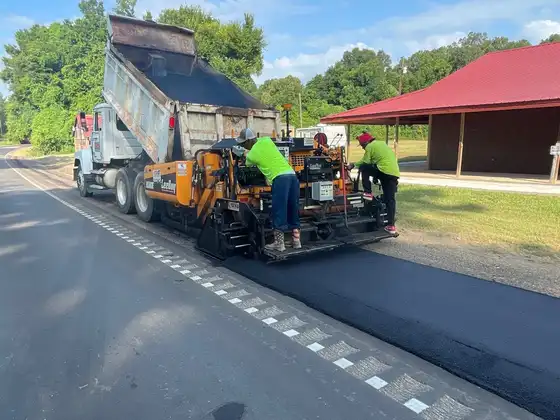
Years of gravel pressed into the ground by tires can be a real head start. After grading, we compact it and check it for soft spots. Where it is solid, clean, and well packed, it stays and becomes part of the base under the asphalt.
Not all gravel qualifies. Stone that has sunk into the clay, mixed with mud, or thinned out in the wheel paths won't support pavement. Those areas get dug out and rebuilt with compacted crushed limestone.
Gravel hides weak ground, because you can keep refilling the ruts. Asphalt doesn't give you that option, so finding and fixing those spots before paving is the most important part of the job.
Drainage changes when gravel becomes asphalt
A gravel surface lets some rain soak through. Asphalt sheds nearly all of it, and that water has to go somewhere. Pave gravel without regrading and you can end up with water running toward the garage, pooling against a building, or cutting a channel along the edge of the pavement.
We look at this at the site visit: where water goes now, where it should go, and how the finished surface needs to slope to get it there. On larger lots there is more water to move, so the grading plan matters even more. Getting this right is a big part of why a converted driveway or lot holds up.
Converting gravel parking lots and lanes
Churches, small businesses, equipment yards, and HOAs often start with gravel lots and lanes and outgrow them. Loose stone and potholes are a trip and liability problem where the public walks, and a gravel lot can't be marked for ADA parking or fire lanes.
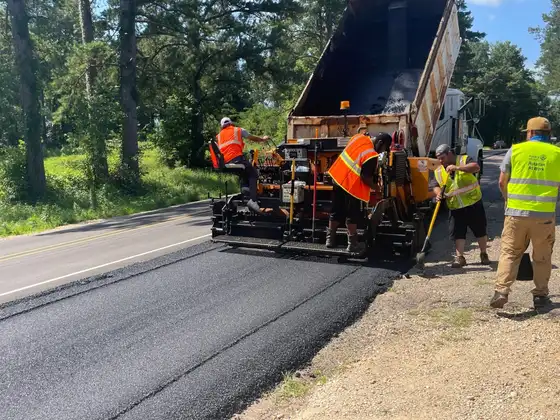
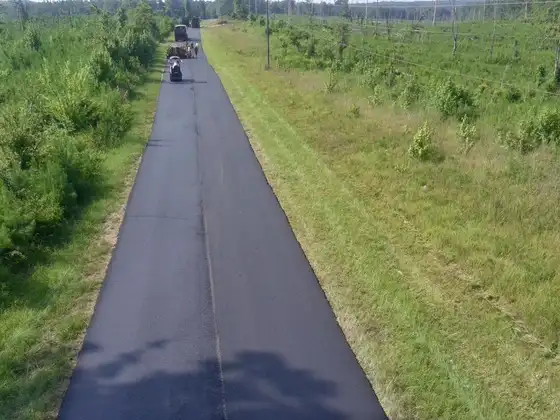
Commercial conversions follow the same steps as a driveway, with the pavement sized to the traffic it will carry. A lot that sees delivery trucks, buses, or loaded equipment needs a heavier section than one that only sees cars, and that is spec'd per job. For lots, see our parking lot paving page; for long lanes, see private road paving.
Once the asphalt is down, our own crews handle the parking lot striping: stalls, ADA spaces and markings, fire lanes, arrows, and crosswalks.
What affects the cost of a gravel to asphalt conversion
The biggest swing in price is how much of your existing gravel can stay. These are the factors that set the number:
- Square footage, or length and width for a lane
- Condition of the existing gravel and the soil under it
- Grading and drainage work
- How much new crushed limestone has to come in
- The traffic the pavement has to carry
- Striping and ADA markings on a lot
Someone comes out to check the grade, soil, and existing gravel, and then we send a free, written, itemized quote with no hidden fees and no obligation.
Upkeep after the conversion
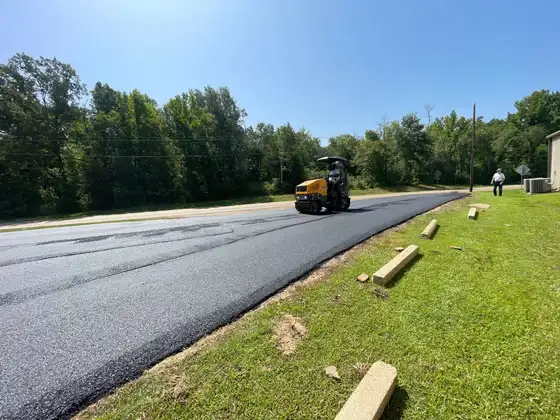
The regrading and stone deliveries stop. In their place is a short list. Give the new asphalt 6 to 12 months to cure, then sealcoat it and reseal every 1 to 2 years. Fill cracks while they are small, and keep soil backed up against the pavement edges so they stay supported.
While the asphalt is curing, it stays softer than old pavement, especially on hot afternoons. Avoid turning wheels in place, and keep trailer jacks and kickstands off it. With that care, an asphalt driveway or lot can last 20 to 30 years.